

Image Source: Trong Khiem Nguyen
By Brian Nelson, CFA
Broader markets in the U.S. continue to be concerned about the impact of the Fed’s rapidly-rising contractionary monetary policy on the banking sector. A number of regional banks have already failed, with SVB Financial’s (SIVB) demise bringing into light concerns over the solvency of many other regional banks in the U.S., if their books of business are marked-to-market for both available-for-sale (AFS) and held-to-maturity (HTM) securities. The Fed raised rates so quickly that many regional banks may have been caught taking on too much interest rate risk.
Liquidity across the regional banking sector, however, seems to have improved thanks to Fed actions, and deposit flight from regional banks seems to have normalized, but many of the smaller banks probably tightened their lending belts in recent weeks to shore up liquidity and their capital positions during the crisis. This has probably had implications on economic growth. Some are estimating that the SVB Financial failure and the resulting panic implicitly tightened monetary policy by an equivalent of 50-100 basis points of rate hikes. The Fed will likely have to take this into consideration in its next policy decision.
We recently “raised” cash across the newsletter portfolios, something that we had been planning to do for some time, and doing so became opportunistic in recent weeks during the onset of the regional banking crisis. We continue to like ideas in the newsletter portfolios and will seek to “re-deploy” the recently “raised” cash in the coming weeks to months. Some of our favorite areas remain big cap tech and large cap growth, as these areas tend to be overflowing with companies that have strong net cash positions on their balance sheets, as well as strong expected free cash flows–the two main sources of cash-based intrinsic value.
We’re being patient, however. For one, first-quarter 2023 earnings season is right around the corner, and it may take a few more weeks to months before we can truly get a feel for the likelihood of any follow-on impacts from implicit credit tightening that was driven by the regional banks during the crisis. We’re also cognizant of the possibility of another shoe to drop, whether in Europe, given Credit Suisse’s (CS) fall from grace, or in commercial real estate (e.g. office buildings), or in the U.S. housing market, more generally, which may further punish the banks and the broader U.S. economy. With that said, here’s some news we’re following closely:
- Best Ideas Newsletter portfolio idea PepsiCo (PEP) will roll out a new logo, the first update in about 14 years. According to the release, “the new design evolves the Pepsi brand to represent its most unapologetic and enjoyable qualities, and will span across all physical and digital touchpoints, including packaging, fountain and cooler equipment, fleet, fashion and dining.” The new logo will debut in the U.S. later this fall and be rolled out around the globe in 2024. Though we don’t find the new look to be material to our thesis, it does send an important message that PepsiCo continues to seek to innovate and advance its perception among consumers, and in that light, we like the announcement. The company’s shares are approaching all-time highs trading in the mid-$180s at the time of this writing.
- Businesses these days have become laser-focused on costs, and FedEx (FDX) is no exception. At a recent investor event, the company noted that it is making progress toward its $4 billion cost reduction program by the end of fiscal 2025 (ending in May 2025) and that it will consolidate its various operating companies (e.g. FedEx Express, FedEx Ground, FedEx Services) into one organization, Federal Express Corporation, which should further streamline its business. The company plans to save $1.2 billion in Surface Network, $1.3 billion in Air Network & International, and $1.5 billion in General & Administrative. The board also hiked its annual dividend ~10%, to $5.04 per share for fiscal 2024 (ending in May 2024). FedEx has definitely had its shares of ups and downs during the past 12-18 months.
- Johnson & Johnson (JNJ) is trying to put to rest claims that its talc powder products caused cancer and is using a strategy by spinning off its future potential liabilities into a subsidiary LTL Management that is targeted to handle talc litigation. With support from more than 60,000 claimants, LTL is expected to pay $8.9 billion over the next couple decades and a half to handle all existing talc claims and any that emerge in the future. Johnson & Johnson isn’t the only major bellwether dealing with litigation risk. 3M (MMM) is facing a plethora of claims related to potentially defective earplugs it sold to the military as well as “forever chemicals” [polyfluoroalkyl substances (PFAS)]. We recently let go of J&J in the newsletter portfolios due in part to its plans to spin-off its Consumer Health division (Kenvue), and we’re largely uninterested in either 3M or J&J at this time given the major distractions litigation can bring to the executive team.
- The age of artificial intelligence [AI] is upon us, and after the public launch of OpenAI’s ChatGPT, a platform that we were mighty impressed with (it can write a poem about outperforming the market in a matter of seconds), businesses have been clamoring to show the public how they, too, have been incorporating AI into their processes. We think Microsoft (MSFT) remains the leader in this space with its investment in OpenAI, and while Alphabet’s (GOOG) (GOOGL) roll out of its conversational, AI chat service Bard was somewhat lackluster, the technology remains in the very early innings, and we’re confident will see myriad improvements in coming months. We anticipate a whole host of use cases for AI, from personal to professional, and it may very well become the platform of the future. Nvidia (NVDA), AMD (AMD), Qualcomm (QCOM) and Alphabet will be key leaders in AI-oriented chip development, with Alphabet touting its own AI chips recently. It’s too early to say just how much Google’s search business is at risk with AI, and we like Microsoft as our favorite risk-adjusted play on AI at the moment.
Concluding Thoughts
SVB Financial’s failure and the ongoing regional banking crisis has likely crimped lending activity and economic growth, a situation further exacerbating any impending effects on the broader economy from the Fed’s contractionary monetary policy, itself. With first-quarter 2023 earnings season around the corner and the potential for another shoe to drop in Europe, commercial real estate or the U.S. housing market, we’re still being patient in putting “newly-raised” capital in the newsletter portfolios to work. Our favorite areas, however, remain big cap tech and large cap growth, as we’re huge fans of their cash-based sources of intrinsic value–both net cash on the balance sheet and future expected free cash flow generation. Microsoft, an idea in both the Best Ideas Newsletter portfolio and Dividend Growth Newsletter portfolio, is one of our favorite ways to play the rise of artificial intelligence.
———-
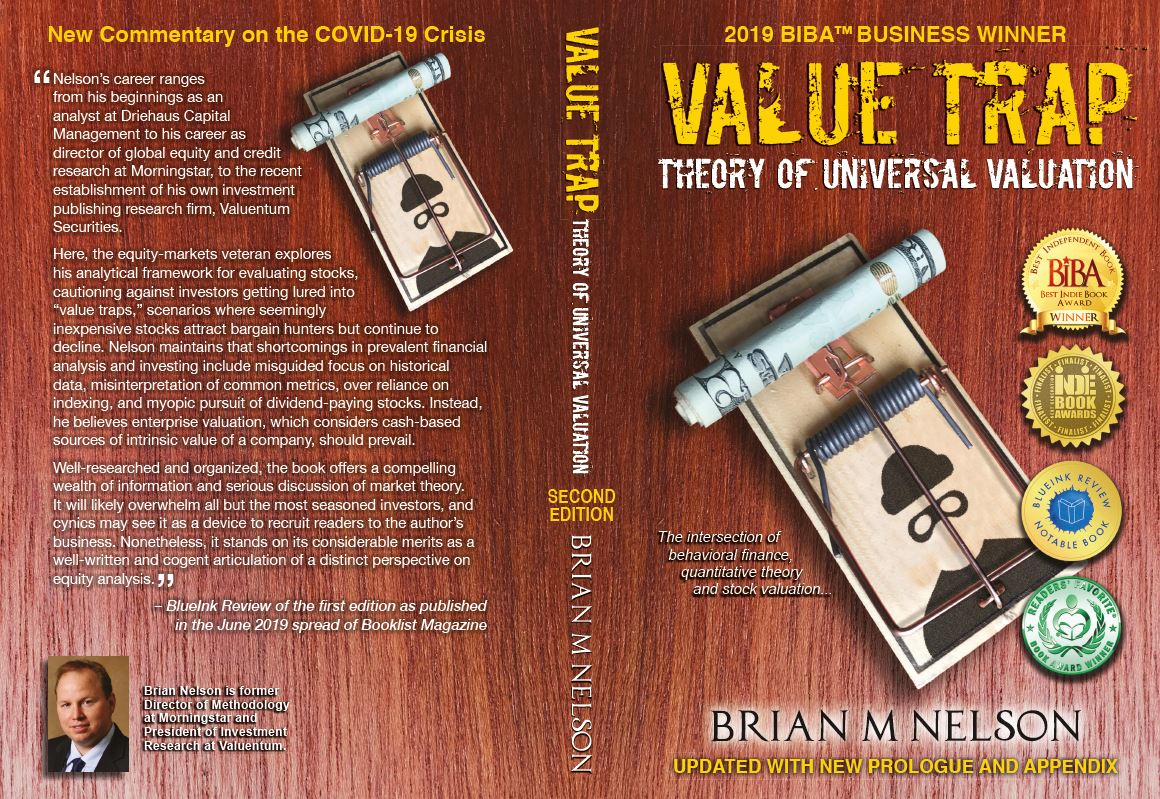
Brian Nelson owns shares in SPY, SCHG, QQQ, DIA, VOT, BITO, RSP, and IWM. Valuentum owns SPY, SCHG, QQQ, VOO, and DIA. Brian Nelson’s household owns shares in HON, DIS, HAS, NKE, DIA, and RSP. Some of the other securities written about in this article may be included in Valuentum’s simulated newsletter portfolios. Contact Valuentum for more information about its editorial policies.
Valuentum members have access to our 16-page stock reports, Valuentum Buying Index ratings, Dividend Cushion ratios, fair value estimates and ranges, dividend reports and more. Not a member? Subscribe today. The first 14 days are free.