
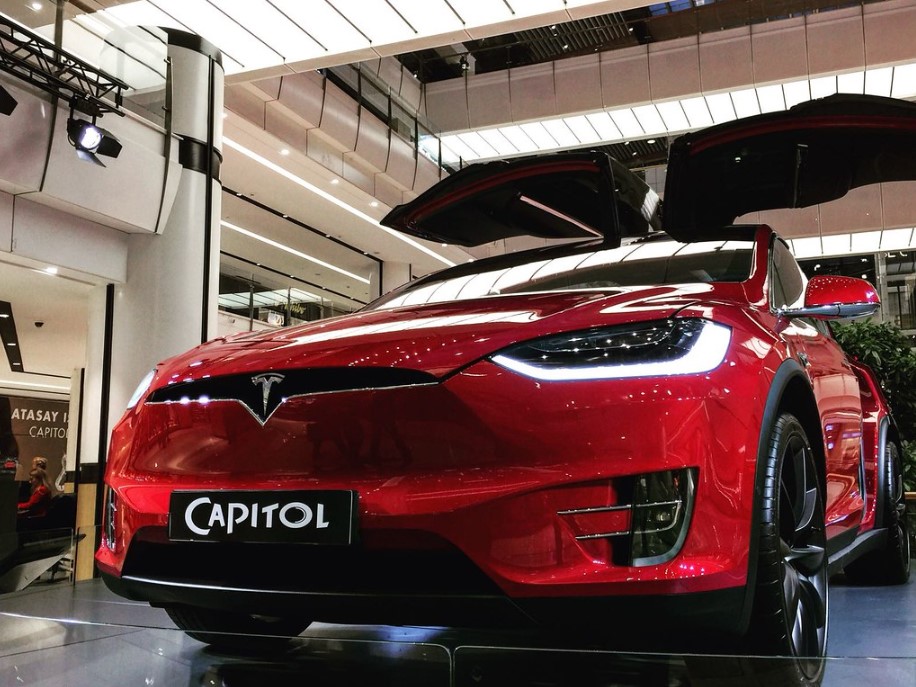
Image Source: Kamil Murat Yılmaz
Tesla reported a significant shortfall in its first quarter 2019 deliveries amid global distribution growing pains, which called in to question its ability to deliver on its reiterated guidance for 2019. Meanwhile, video game retailer GameStop continues to face challenges presented by headwinds beyond its control and expects its revenue contraction to accelerate in fiscal 2019. We’re not interested in shares of either company.
By Kris Rosemann
Tesla’s First Quarter Deliveries Disappoint, But Full Year Guidance Reiterated
Electric car maker Tesla (TSLA) stumbled out of the open April 4 after its April 3 release of its first quarter 2019 deliveries figure, which came in markedly short of expectations. 63,000 deliveries in the quarter was more than double the figure of the first quarter of 2018 but marked a 31% sequential drop. Management pointed to significantly higher deliveries in Europe and China causing growing pains with respect to its distribution capabilities, which should shift a notable number of deliveries to the second quarter. This is not the first time the company has experienced execution issues in the production or distribution phases of its business, but it reiterated its expectations for 360,000-400,000 vehicle deliveries in 2019. Management also disclosed that it “ended the quarter with sufficient cash on hand,” but did not provide an explicit figure. Total cash was nearly $3.9 billion at the end of 2018 compared to nearly $12 billion in total debt.
Tesla’s bottom-line will be negatively impacted by the significant shortfall in deliveries (consensus deliveries expectations were in the mid-70,000s range), as well as several pricing adjustments. The disappointment calls in to question the sustainability of Tesla’s recent positive free cash flow generation, though the company did previously note that the measure would likely be in negative territory in the first quarter of 2019 even before its weak deliveries report. It is worth noting that the company’s exit rate of deliveries in the quarter was solid, as it delivered roughly half of the quarter’s vehicles in the final ten days of the period.
We’ve stated in the past that we love Tesla’s future expected free cash flow, but we also remain skeptical of the company’s long-term success in such a fiercely competitive environment, especially after considering its lack of a reliable track record when it comes to profitability, production, and distribution. We’re not dismissing Tesla by any means, it may very well come out of the electric vehicle revolution on top, but it has a long way to go in proving itself as a reliable generator of free cash flow, which is the only sound basis for the value of any equity. For the time being, we continue to view Tesla as a speculative entity, and its share price is likely to remain volatile for some time as it continues to sort out its production and distribution growing pains on its quest for consistent free cash flow generation. Our fair value estimate for Tesla remains relatively unchanged at $290 per share.
GameStop’s Top-Line Rate of Decline to Accelerate, We’ve Cut Our Fair Value Estimate
GameStop’s (GME) struggles of late have been no secret, and the ongoing shift away from hardware in the videogame space has been well publicized. Unfortunately for the video game retailer, the keys to its success are largely beyond its control. The company’s video game accessories, digital, and collectibles sales are growing nicely, but these products account for just over 22% of total revenue as of the full fiscal year 2018, results released April 2. Its new video game hardware and pre-owned and value video game products, which account for ~21% and ~23% of total revenue, respectively, remain mired in secular decline, while its new video game software sales (~30% of total) are tied in part to poor hardware trends and are largely hit driven, or dependent upon the release of popular video game titles.
Management issued fiscal 2019 guidance for both total sales and comparable store sales to fall by 5%-10% over fiscal 2018 levels, which marks an acceleration in the decline from fiscal 2018’s ~3% drop in total sales and 0.3% decline in comparable store sales. We’ve slashed our fair value estimate for shares to $14 each following the guidance update, and free cash flow trends are becoming increasingly worrisome (the measure fell to $231 million in fiscal 2018 from $484 million in fiscal 2015).
GameStop is still able to cover annual run rate cash dividend obligations of $157 million with free cash flow, and it holds a net cash position of ~$804 million as of the end of fiscal 2018. This net cash position provides a considerable portion of its equity value, but it should be noted that off-balance sheet obligations exist in the form of purchase agreements and operating leases. In this vein, the company retains some financial optionality, but it continues to pull back on capital spending to buoy free cash flow generation, which may only further impair future growth prospects. The best-case scenario for shareholders may very well end up being a go-private offer, but management ended its sale exploration process in January 2019. We’re not being roped in to this downward spiraling retailer by its artificially lofty dividend yield.
Related tickers: SNY, NTDOY
—–
Valuentum members have access to our 16-page stock reports, Valuentum Buying Index ratings, Dividend Cushion ratios, fair value estimates and ranges, dividend reports and more. Not a member? Subscribe today. The first 14 days are free.
Kris Rosemann does not own shares in any of the securities mentioned above. Some of the companies written about in this article may be included in Valuentum’s simulated newsletter portfolios. Contact Valuentum for more information about its editorial policies.