
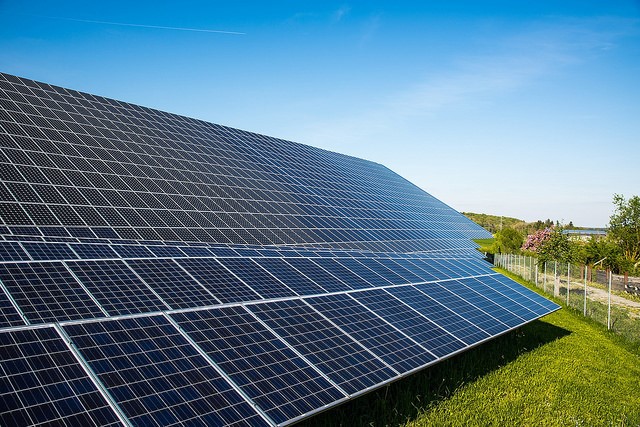
Image Source: zak zak
Though First Solar stands alone as one of the stronger players in the solar space, we think the industry backdrop is among the weakest in our coverage universe. We’re huge fans of clean renewable energy but separating what we want to be a good industry like solar from an industry that actually has strong structural characteristics is a key component of being a good investor. Oftentimes, it is better to own an average company in a great industry than a good company in one of the worst industries out there.
By Brian Nelson, CFA
Sometimes it is too easy to invest with your heart and overlook opportunities across “sin” stocks. For example, you may dislike tobacco, and you have every right to, but tobacco stocks such as Altria (MO) have been among the best-performing investments over the past many years. You may abhor gambling, but Churchill Downs’ (CHDN) stock has really caught a huge bid on new regulations to legalize sports betting. Alcohol may literally not be your “cup of tea,” but a company such as Constellation Brands (STZ) has had an impressive stock-price run since the doldrums of the last recession.
Likewise, and to the point of this article, it’s equally important to separate what you want to believe is an excellent (“feel good”) product and what you may think is a good investment opportunity, as sometimes these two things can be very different. The specific topic in mind is solar energy. Solar energy remains one of the fastest-growing forms of renewable energy, and the environmental benefits have been well documented. The industry has even worked aggressively to lower the cost of producing solar electricity, and we can only expect further improvements as technology continues to advance. However, it’s not that we don’t like solar and renewable, clean energy, it’s just that the industry backdrop is not necessarily conducive to companies being good investments:
The solar industry continues to be characterized by intense pricing competition, both at the module and system levels. In particular, module average selling prices in the United States and several other key markets have experienced an accelerated decline in recent years, and module average selling prices are expected to continue to decline globally to some degree in the future. In the aggregate, we believe manufacturers of solar cells and modules have significant installed production capacity, relative to global demand, and the ability for additional capacity expansion. We believe the solar industry may from time to time experience periods of structural imbalance between supply and demand (i.e., where production capacity exceeds global demand), and that such periods will put pressure on pricing. Additionally, intense competition at the system level may result in an environment in which pricing falls rapidly, thereby further increasing demand for solar energy solutions but constraining the ability for project developers, EPC companies, and vertically-integrated solar companies…to sustain meaningful and consistent profitability (source: First Solar 2017 10-K).
We know such an excerpt from First Solar’s (FSLR) 2017 10-K doesn’t apply to all companies in the solar industry, but the backdrop is nonetheless poor, if not as bad as First Solar makes it out to be. It is often the case that a large percentage of company economic returns are determined by the industry in which a company operates, and the solar industry is one difficult industry to carve out a sustainable competitive advantage, let alone sustainable economic profits. First Solar is our favorite idea in the solar space, if we ever had to pick one, but that doesn’t mean that we like it better than Apple (AAPL), Facebook (FB), or Visa (V), for example. Think of First Solar as the good company in one of the worst industries possible. Oftentimes, it is better to own an average company in a great industry than a good company in one of the worst industries out there.
On June 4, the South China Morning Post reported that China (FXI, MCHI) is taking measures to “rein in the expansion of the industry, by suspending the construction of new farms and cutting subsidiaries.” We think many publicly-traded solar entities were caught by surprise by the announcement, as shares of many sold off aggressively following the news. It looks as though China isn’t standing behind the solar industry as much as many had hoped, and it’s looking more and more likely that original global solar installation estimates are likely too high and have to come down. We don’t think this is the death knell for many smaller participants in the solar complex, but we do think it may make it harder for them to raise much-needed financing. We’re going to continue to stay away from investing in solar, no matter how much we like clean, renewable energy.
Solar: CSIQ, FSLR, JKS, RUN, SPWR
Related ETFs: TAN, KWT
Related tickers: DQ, ENPH, SOL, VSLR, YGE
—–
Valuentum members have access to our 16-page stock reports, Valuentum Buying Index ratings, Dividend Cushion ratios, fair value estimates and ranges, dividend reports and more. Not a member? Subscribe today. The first 14 days are free.
Brian Nelson does not own shares in any of the securities mentioned above. Some of the companies written about in this article may be included in Valuentum’s simulated newsletter portfolios. Contact Valuentum for more information about its editorial policies.