
Image Source: Mike Mozart
The 2017 holiday shopping season has shown that e-commerce has never been stronger and it will only continue to grow. But there is still potential for income generation among more traditional retailers. Investors must be tremendously discerning in this area, however, as margin, and ultimately free cash flow, pressures remain prevalent. We like Walmart, Target, Costco as income ideas in retail, but TJX Companies and Best Buy may be worth a look. We’re avoiding the department stores and teen retail like the plague, regardless of their Dividend Cushion ratios.
By Kris Rosemann and Brian Nelson, CFA
What an incredible time we’re living in. For those that study history, the US’ pressure on other countries like China to stop shipping oil to North Korea seems eerily similar to the time when the US stopped exporting oil to the Empire of Japan shortly before the Pearl Harbor strike. North Korea, on November 28, successfully tested its first ballistic missile, too, and some are saying the nuclear-armed country has the ability to strike the US. Meanwhile, digital currencies continue to gain wider appeal, as Bitcoin’s price has recently leapt toward $11,000—all the while the equity markets continue to march to new all-time highs. President Donald Trump is loving it!
Our FIFTH 1K milestone of 2017!#DOW24K #MAGA pic.twitter.com/NoVt1uFp0y
— Donald J. Trump (@realDonaldTrump) November 30, 2017
The Dow just broke 24,000 for the first time (another all-time Record). If the Dems had won the Presidential Election, the Market would be down 50% from these levels and Consumer Confidence, which is also at an all-time high, would be “low and glum!”
— Donald J. Trump (@realDonaldTrump) November 30, 2017
But how about retail and the holiday shopping season? The preference for online shopping has never been more apparent that the recent 5-day holiday shopping weekend–starting with Thanksgiving Day and ending with Cyber Monday. As preliminary numbers come in for the 2017 holiday shopping season, it appears as though Cyber Monday, November 27, 2017, was the largest online shopping day in US history, bringing in an estimated $6.59 billion in sales, a nearly 17% increase from 2016, according to Adobe. The pace of growth is in-line with the rest of this robust holiday shopping season thus far (November 1-27), which has resulted in ~$50 billion in online revenue over this multi-week period, with retailers reeling in ~$7.9 billion in online sales in just two of those days, Thanksgiving Day and Black Friday combined. The best sellers? Here’s what Adobe had to say:
Top sellers on Cyber Monday included the Nintendo Switch (NTDOY, NTDOF), PJ Masks and Hatchimals & Colleggtibles figurines, Apple AirPods (AAPL), streaming devices like Google Chromecast (GOOG, GOOGL) and Roku (ROKU), and Super Mario Odyssey, the video game.
According to Adobe, web traffic advanced nearly 12% on Cyber Monday, and mobile continues to take an increasing share of this traffic. Mobile visits accounted for 47.4% of total visits (~40% from smartphones and the balance from tablets), and 33.1% of total online sales were completed on mobile devices (~24% on smartphones). Smartphone traffic leapt more than 22%, while smartphone revenue grew by ~39% from Cyber Monday 2016 as average order value on smartphones continues to climb and ‘closing rates’ advance. A key driver of such growth is millennials (MILN), as 75% of the age group expects to shop via smartphones. Improving technology and mobile security are likely playing a role in consumers’ willingness to spend larger amounts on mobile devices as well.
Web traffic has grown at a much slower rate in the overall holiday shopping season than on Cyber Monday–though it is up more than 5% thus far–reaffirming the notion that consumers are not only driven by convenience, but also discounting. The National Retail Federation reported 60% of shoppers made the majority of their purchases based on discounting. While material discounting and promotional activity have wreaked havoc across the traditional retail landscape in recent years, it appears to have helped hold up traffic numbers on Black Friday this year. ShopperTrak reports store traffic fell less than 1% on Black Friday 2017 from 2016. Adobe had some things to say about where the biggest discounts were, too:
Largest price drops heading into Cyber Monday were for toys (HAS, MAT) with an average discount of 18.8 percent, followed by TVs at 21.1 percent and computers at 14.7 percent. Black Friday saw the largest discounts for computers (15.9 percent on average), followed by TVs (21.6 percent) and toys (17.3 percent). On Giving Tuesday, pet products as well as furniture and bedding are expected to see the best deals with 22 and 13 percent respectively. Related: SSNLF, SNE.
However, a good deal of the increased web traffic, and subsequent sales, may be driven by multi-channel strategies employed by retailers that embrace online price comparison and research, something that has become indispensable for many consumers. These consumers, perhaps emboldened by their newfound confidence in pre-identifying their desired purchases, spend more on average than online-only or in-store-only shoppers, a trend that has caught the eye of retailers. Over the long weekend, multi-channel shoppers spent an average of $82 more than online-only shoppers and $49 more than in-store-only shoppers, and more shoppers reported using a multi-channel approach than either of the other single-channel approaches.
So just how attractive is a multi-channel model compared to single-channel approaches, even online only? Overstock.com (OSTK) is considering the sale of its home-ecommerce business as CEO Patrick Byrne claims, “I hear the Gods of Economics whispering that the best model is a brick-and-click model.” Many brick-and-mortar retailers are spending big on e-commerce and digital initiatives, a strategy with negative near-term margin implications but one that many hope will result in a net positive over the long term. Such investments appear to be appropriate for the current retail environment, as we’ve seen with Amazon’s (AMZN) foray into just about everything, including pharma, nothing may be completely insulated from e-commerce proliferation, not furniture (BBBY, PIR, ETH), auto parts (AAP, AZO, ORLY), or even beauty supplies (SBH, ULTA).
Amazon is the clear leader in online retail (as well as the share leader in the cloud services market), and the e-commerce giant reported that Cyber Monday was its largest shopping day ever, though few specifics were provided. Similar to eBay (EBAY), which said that this past Cyber Monday was its best in its 22-year history, Amazon appears to be taking advantage of a network effect on its online marketplace; as more consumers use its marketplace, more merchants use the channel to sell goods and vice versa. Illustrative of this is the record number of new Prime member sign-ups on its Prime Day 2017, which helped its Cyber Monday performance outdo that of its own online shopping holiday, a noteworthy development as Prime Day 2016 sales were greater than Cyber Monday 2016 sales.
A couple weeks before Cyber Monday, online sales during Single’s Day (November 11), a holiday for those celebrating the single lifestyle in China (FXI, MCHI), shattered previous records, too. Truly, global e-commerce is proliferating, and the pace of growth for Chinese-based online retailers remains phenomenal. During the first 15 minutes of Single’s Day, Alibaba (BABA) alone recorded sales of a whopping $5 billion, according to CNBC. When it was all said and done, Alibaba brought in $25+ billion during the one-day extravaganza, making it by far the “world’s biggest shopping event.” JD.com (JD) also did quite well, reporting that its Single’s Day tally advanced ~50% from the same period a year-ago. From November 1 through November 11, JD.com hauled in more than $19 billion in sales. Interestingly, fresh foods and cosmetics were big sellers (Thailand black tiger shrimp, and facial masks).
 A partner with JD.com, Walmart (WMT), in its not-so-subtle, direct competition with Amazon to sell consumers everything, has been working hard to advance its e-commerce business, and it appears to be doing well as acquisitions have bolstered its digital presence. In its recently-reported fiscal third quarter results, the retail giant reported digital sales growth of 50% and gross merchandise value growth of 54% on a year-over-year basis. Comps have held up well for Walmart of late as well, and though we are expecting dividend growth to remain relatively subdued, its payout looks to be on solid ground while offering investors a ~2.1% yield. Its Dividend Cushion was a sturdy 1.6 at last check as free cash flow generation remains robust.
Walmart’s domestic little brother Target (TGT) has also delivered strong digital improvements in recent quarters with comparable digital channel sales leaping 24% from the year-ago period in its fiscal third quarter, which comes on top of 26% growth in the third quarter of fiscal 2016. Fourth quarter guidance from the firm left a bit to be desired, but we continue to view it as one of the premier retailers in its industry. Its dividend is among the most competitive in its peers as well as shares yield nearly 4.4% as of this writing to go along with a Dividend Cushion ratio of 1.4, but we must note that this is an adjusted calculation due to Target’s former credit card receivables portfolio.
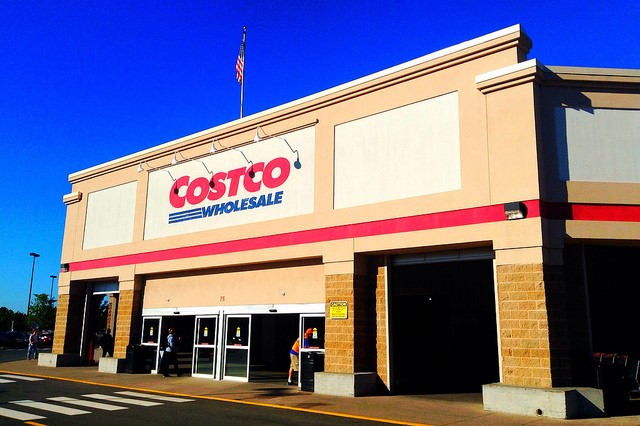
Anywhere Amazon plans to compete, investors are fretting, but recent news from Costco (COST) may have allayed some fears. The company registered phenomenal growth rates during the four weeks ended November 26, information released November 29. A total company comparable store increase of nearly 11% (yes, not a typo) may be the best data point yet that traditional retailers aren’t falling to Amazon without a big fight. Backing out changes in gas prices and foreign exchange, the comparable store growth for that 4-week period remained a healthy 7.9%. E-commerce sales at Costco advanced 39% in the first four weeks of November, while the mark is up nearly 44% during the first twelve weeks of its fiscal year.
Perhaps the area of retail most punished by e-commerce proliferation and changing millennial preferences has been department stores, and investors need look no further than the Dividend Cushion ratios of companies in the arena to get an understanding of our expectations for free cash flow performance (coupled with potential issues related financial leverage). Kohl’s (KSS), Macy’s (M), and Nordstrom (JWN) all register Dividend Cushion ratios well below 1 and garner Dividend Growth and Dividend Safety ratings of VERY POOR. Please be wary of chasing high-yields that are a result of beaten down stock prices, as Macy’s equity comes immediately to mind. In a world where Amazon and Alibaba are taking consumers by storm, Macy’s may not have the long-term luxury of continuing to pay out an outsize yield, even if it can muster one over the near term.
Readers should take note of the lower bound of our fair value estimate ranges for J.C. Penney (JCP) and Sears Holdings (SHLD), both of which are currently $0. Both of these retailers have material liquidity risk on top of struggling operations, though a partnership with an online retailer seeking brick-and-mortar exposure, such as Overstock.com, could provide some relief, but not an answer to all of their problems. Go-private rumors and REIT-related conversion talk continue to swirl the industry, but with the Nordstrom family unable to secure adequate funds to take its operation private, many investors have become increasingly concerned about financing availability at reasonable terms. An increase in retail real estate supply should be monitored closely as well, especially as it relates to the value of the real estate portfolios at department stores starting down an abyss.
Despite the struggles we’ve seen from traditional brick-and-mortar retailers, a number of companies in our coverage universe boast solid, if not impressive, Dividend Cushion ratios. These companies share one specific trait, despite our free cash flow expectations for these companies often not being all that robust. That characteristic is a strong net cash position on the books. Free cash flow may be trending in the wrong direction for many, but a net cash balance gives these retailers ample flexibility to tap into the balance sheet to make investments or continue returning cash to shareholders. Surely, the retail space, in itself, is not one to bank on any one company’s turnaround given the ever-changing preferences of consumers, but it’s good to know a company has financial flexibility, even as we say that this still may not be enough for even more risk-tolerant investors.
Aside from the big three, Walmart, Target and Costco, the latter boasting a Dividend Cushion of 2.6 at the time of this writing, there are a few other dividends that we want to make you aware of, if only because of their respective balance-sheet optionality. We wouldn’t touch Gap (GPS), American Eagle Outfitters (AEO), and Abercrombie & Fitch (ANF) with a 10-foot pole given the fickle nature of teen retail, of course, but TJX Cos (TJX), and Best Buy (BBY) may be worth a look for those with income-orientation. Best Buy has been fighting back against Amazon with some success in recent years, and while investors may not have liked Best Buy’s long-term guidance provided in September, a range calling for earnings per share of $4.75-$5.00 by fiscal 2021 isn’t bad. GameStop (GME) has a nice balance sheet, but its back remains against the wall, even as Nintendo Switch sales have offered a short-term reprieve against the secular trend of weakening used-game sales.
All things considered, the holiday shopping season is setting records across the board, not only in the US but also in China and beyond. For those reaching for yields in the retail space, Walmart, Target and Costco may be the best bets, though TJX Companies and Best Buy are worth a look. We include Dollar General (DG) in the Best Ideas Newsletter, as we believe that the dollar-store arena may be the only true space insulated from Amazon. Fundamentally speaking, Dollar General has a lot going for it, too, “Dollar General: 27 Consecutive Years and Counting.” We’re avoiding the department stores like the plague, and it is clear that Sears’ spin-off of its real estate into Seritage Growth (SRG) hasn’t mitigated deteriorating operating trends. Financial engineering is a very short-sighted view on value-creation, so we very much prefer operating improvements over monetizing assets on the books, all else equal. In any case, with consumer confidence at 17-year highs, this holiday shopping season is one for the record books. There will always be winners and losers, however.
Related ETFs: XLY, XRT, VCR, IBUY, RTH, RETL, FDIS, IYK, IYC, FXD, SCC, UCC, RCD, UGE, PMR, SZK, FTXD, CLIX, CNDF, EMTY, JHMC