
Image Source: David Holt
Media giant Disney has been executing well of late as it leverages its successful content into a broader scope of entertainment, but competition may be heating up related to its pending acquisition of Twenty-First Century Fox’s media assets.
By Kris Rosemann
Worldwide entertainment company Walt Disney (DIS) operates in four business segments: ‘Media Networks’ (cable and broadcast television networks, including ABC, ESPN and the Disney Channel), ‘Parks and Resorts’ (resorts in Florida, California, Paris and more), ‘Studio Entertainment’ (films under the Walt Disney Pictures, Pixar, Marvel, Lucasfilm and Touchstone banners), and ‘Consumer Products & Interactive Media’ (the licensing of trade names, characters and literary properties).
The company’s ‘Media Networks’ operation is the largest portion of its business, accounting for 40%+ of revenue and segment operating income during 2017. The ‘Parks and Resorts’ segment accounted for 30%+ of revenue and ~25% of segment operating income during 2017, and its ‘Studio Entertainment’ and ‘Consumer Products & Interactive Media’ divisions the balance. The best-performing segments during the past couple years have been Disney’s ‘Studio Entertainment’ division, where segment operating income increased to $2.36 billion in 2017 from $1.97 billion in 2015, and its ‘Parks and Resorts’ division, where operating income leapt to $3.77 billion in 2017 from ~$3 billion in 2015.
Similar trends continued during Disney’s second quarter of fiscal 2018, results released May 8, where its ‘Studio Entertainment’ and ‘Parks and Resorts’ segments led the charge, and each of its operating segments turning in positive revenue growth in the quarter as overall revenue rose 9% from the year ago period. Double-digit revenue growth in both the ‘Studio Entertainment’ and ‘Parks and Resorts’ segments helped drive operating income growth in the high 20s on a percentage basis in both segments, which drove overall operating income higher by 6% on a year-over-year basis as operating income in its ‘Media Networks’ segment was weighed down by higher programming costs at ESPN and an operating loss at BAMTech.
Despite the relative weakness on the operating line, adjusted earnings per share leapt 23% from the year-ago period thanks in part to a lower tax bill. Free cash flow in the first half of Disney’s fiscal 2018 jumped nearly 72% on a year-over-year basis to more than $4.7 billion even as capital spending grew more than 6%, and the company continues to exhibit tremendous coverage of dividend payments, which came in at less than $1.3 billion in the first half, with free cash flow. Disney’s Dividend Cushion ratio sits at 2.9, and shares yield ~1.6% as of this writing.
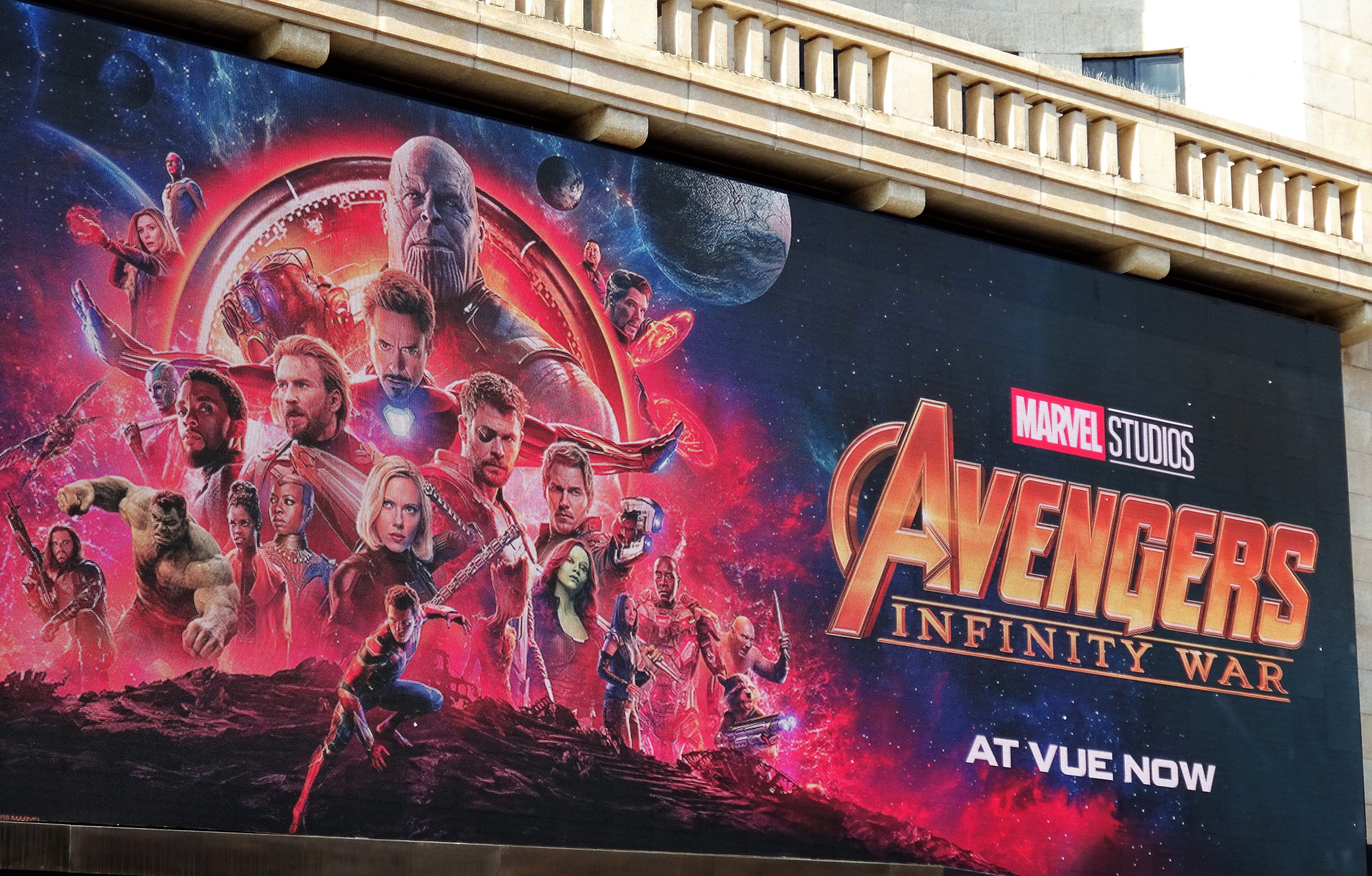
Disney’s success has blossomed from its ability to churn out high-level content matched in very few places across the entertainment landscape. Though hit films have the potential to make quarterly results lumpy, the stickiness of a fan base that comes along with a line of movies such as Star Wars or the ongoing series of Marvel titles can prove to be a uniquely leverage-able advantage as the success of these films feeds directly into the success of its parks and resorts and licensing activities. In May, Avengers: Infinity War, for example, earned $1 billion faster than any other movie in history. According to Box Office Mojo, Disney has an incredible ~34% studio market share so far in 2018 through May 13 thanks to a plethora of additional major hits (Black Panther, Star Wars: The Last Jedi, A Wrinkle in Time, Coco, Thor: Ragnarok). Disney simply has a fantastic business model.
We’re keeping our eye on the M&A scene at Disney as Comcast (CMCSA) is reportedly preparing an all-cash bid of as much as $60 billion for Twenty-First Century Fox’s (FOX) media assets, which the firm has already agreed to sell to Disney for an equity value of $52.4 billion in stock. Regulatory scrutiny is a material consideration in the progress of the deal talks, and Comcast management plans to proceed with its bid only if federal judges allow the pending AT&T-Time Warner deal to proceed (decision expected in June).
We like the deal from a strategic point of view for Disney as it will further strengthen its entertainment portfolio, expand its direct-to-consumer offerings to fend off Netflix’s (NFLX) growing dominance (Disney’s stake in streaming service Hulu will become a controlling interest), and adds a material extension of its international offerings. Disney will issue 515 million new shares to Twenty-First Century Fox shareholders, and it will assume $13.7 billion in net debt associated with the assets. The deal is expected to result in $2 billion in cost savings, and it also reportedly includes a $2.5 billion break-up fee if blocked by regulators and a $1.52 billion breakup fee if the deal does not go through for other reasons.
Disney is well-positioned to maintain its strong position in the media entertainment space, and its recent blockbuster release Avengers: Infinity War, which has been dominating box office results, is but the latest example of how it is able to showcase its potential to leverage box office success across its other business units. The assumption of nearly $14 billion in debt associated with the Fox deal, assuming the deal gets done, will impact its balance sheet health and robust Dividend Cushion, but we like the deal from a bigger-picture perspective. Shares of Disney look to be fairly valued and are trading just above our current fair value estimate of $98 per share.
Media – Entertainment: CNK, DIS, IMAX, ISCA, LYV, MSG, NFLX, NWSA, RGC
Media: CBS, CETV, GCI, GHC, NYT, SNI, TV, TWX
—–
Valuentum members have access to our 16-page stock reports, Valuentum Buying Index ratings, Dividend Cushion ratios, fair value estimates and ranges, dividend reports and more. Not a member? Subscribe today. The first 14 days are free.
Kris Rosemann does not own shares in any of the securities mentioned above. Some of the companies written about in this article may be included in Valuentum’s simulated newsletter portfolios. Contact Valuentum for more information about its editorial policies.