

Image Source: Mike Mozart
By Brian Nelson, CFA
Stock prices and returns are in part a function of a company’s net cash position on the balance sheet and the free cash flows that it will generate in the future for shareholders. We call net cash and future expected free cash flow generation the two primary cash-based sources of intrinsic value in determining a company’s fair value estimate.
When it comes to assessing dividend health, we examine these two cash-based sources of intrinsic value, too. For example, a company with a strong net cash balance has greater financial flexibility than a firm with a large and prohibitive net debt position. Entities that generate strong free cash flows in excess of their cash dividends paid are also better positioned than entities where free cash flow comes up short in covering the payout obligations.
With that said, let’s have a look at the key financials of three of our favorite dividend growth stocks.
Apple (AAPL) – Dividend Cushion ratio: 9.5
Apple ended 2023 with cash and marketable securities of $172.6 billion and term debt of $106 billion, good for a solid net cash position, as it hauled in $37.5 billion in free cash flow during the quarter. Cash dividends paid were $3.8 billion in the quarter. Though Apple’s recent results disappointed some investors, we’re sticking with this net-cash-rich, free-cash-flow generating, secular growth powerhouse in the newsletter portfolios. The company’s yield is not a head-turner at 0.6%, but the firm’s dividend growth prospects remain phenomenal given the nature of its balance sheet and free cash flow generation in excess of cash dividends paid.
Microsoft (MSFT) – Dividend Cushion ratio 4.3
Microsoft ended 2023 with total cash and short-term investments of $81 billion and short- and long-term debt of $74.2 billion, as it has moved more toward a net-neutral balance sheet (given its large deal for Activision), but nonetheless it held a net cash position at the end of the year. For the three months ended December 31, cash flow from operations expanded an incredible 68.7%, to ~$18.85 billion, while free cash flow in the period leapt to ~$9.2 billion. Cash dividends paid in the quarter were ~$5.57 billion. Microsoft’s cash-based sources of intrinsic value are strong, and while its dividend yield of 0.7% trails that of the average S&P 500 company, its future dividend growth prospects are fantastic.
Dick’s Sporting Goods (DKS) – Dividend Cushion ratio: 2.4
Dick’s Sporting Goods ended its fiscal year with ~$1.8 billion in cash and ~$1.5 billion in total debt, good for a modest net cash position, though it does have meaningful operating lease liabilities on the books. Dick’s Sporting Goods’ free cash flow advanced to ~$940 million in its fiscal year (compared to ~$351.2 million in cash dividends paid), up from $557.8 million last year (compared to $163.1 million in cash dividends paid). We like Dick’s Sporting Goods’ balance sheet and strong free cash flow generation, and its mid-teens P/E valuation multiple is quite reasonable. Shares yield ~2.1% at the time of this writing.
Concluding Thoughts
There are many applications for the discounted cash-flow model. Not only does the tool help to derive a fair value estimate for a company, but the core drivers behind the intrinsic value calculation are also key drivers behind the health of a dividend payer. Stocks with a solid net cash position and also generate strong expected free cash flows more than their cash dividend obligations are in a much better position to grow their payouts in the future than stocks burdened by a net debt position and where their free cash flow comes up short. Apple, Microsoft and Dick’s Sporting Goods make the cut and are three of our favorite dividend growth stocks on the market today.
—–
NOW READ: 12 Reasons to Stay Aggressive in 2024
NOW READ: 2023 Was a Fantastic Year! Are You Ready for 2024?
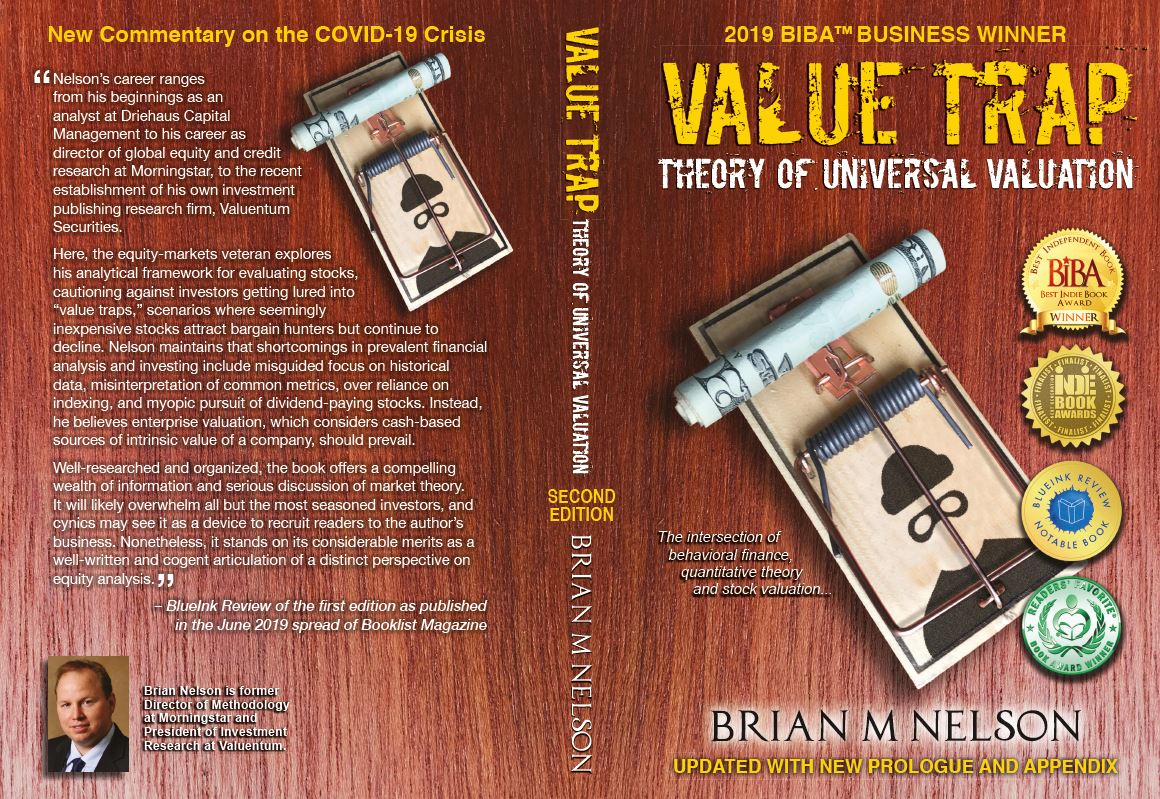
Brian Nelson owns shares in SPY, SCHG, QQQ, DIA, VOT, RSP, and IWM. Valuentum owns SPY, SCHG, QQQ, VOO, and DIA. Brian Nelson’s household owns shares in HON, DIS, HAS, NKE, DIA, RSP, SCHG, QQQ, and VOO. Some of the other securities written about in this article may be included in Valuentum’s simulated newsletter portfolios. Contact Valuentum for more information about its editorial policies.
Valuentum members have access to our 16-page stock reports, Valuentum Buying Index ratings, Dividend Cushion ratios, fair value estimates and ranges, dividend reports and more. Not a member? Subscribe today. The first 14 days are free.